
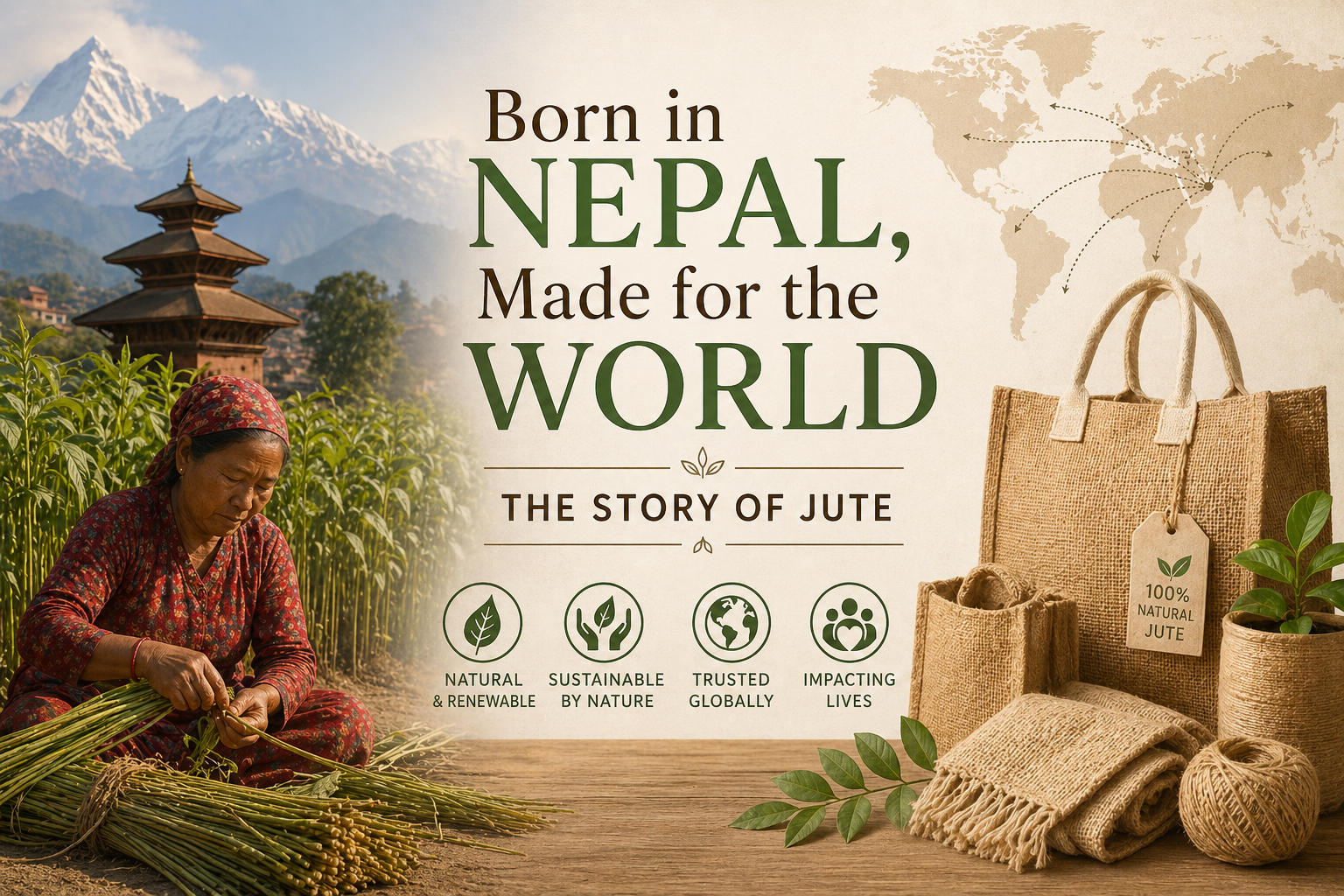
Born in Nepal, Made for the World: The Story of Jute
There’s a particular kind of energy on our factory floor in the early hours of the morning — the steady rhythm of looms at work, the smell of natural fiber in the air, and the quiet focus of skilled workers turning raw jute into something beautiful. This is where every TheKosha product begins. Not in a distant warehouse. Not behind a complicated supply chain. But deep in Nepal’s jute heartland, in a region that has lived and breathed this golden fiber for generations.
What Is Jute And Why Does It Matter?
Before we tell you our story, let’s talk about the material at the heart of it.
Jute is a natural plant fiber — long, soft, and lustrous — grown primarily across the fertile lowlands of South Asia. In Nepal’s eastern Terai region, where our factory is rooted, jute has been a cornerstone of agriculture and local industry for over a century. Farmers plant it at the start of the monsoon season and harvest it by hand just a few months later. The stalks are retted in water to loosen the fibers, sun-dried, and spun into the strong, versatile yarn that becomes the foundation of everything TheKosha makes.
It sounds simple. And in a way, it is.
But that simplicity is exactly what makes it extraordinary.
Jute is 100% biodegradable. It grows without synthetic fertilizers. It absorbs CO₂ at a higher rate than most trees during its growing cycle. When a jute product reaches the end of its life, it returns to the earth cleanly — leaving nothing harmful behind.
In a world drowning in plastic, polyester, and synthetic waste, choosing jute is one of the most honest decisions a brand — or a consumer — can make.
Why Here? Nepal’s Jute Heartland
Our factory sits in Nepal’s eastern Terai — a region with some of the most ideal conditions in all of South Asia for growing and processing jute. The climate, the soil, and decades of accumulated industrial knowledge make this one of the few places in the world where jute manufacturing is not just possible, but deeply natural.
The knowledge of how to work with jute — how to clean it, spin it, weave it, and finish it — is embedded in the local workforce here in a way that simply cannot be replicated overnight elsewhere. This is a region that has grown up alongside the jute industry. The skills are inherited, refined over generations, and very much alive today.
When TheKosha’s founders set out to build a brand around jute home goods and bags, choosing this region wasn’t just a practical decision. It was the only decision that made sense. This is where the raw material comes from. This is where the expertise lives. This is where the supply chain is shortest, most transparent, and most honest.
And when you visit our store — nestled in Nepal’s vibrant capital — you are seeing the finished expression of everything that begins out east, in the factory.
Inside the Factory: How a The Kosha Product Is Made
Every product in the TheKosha collection — from the Serene Carpet to the Hold Tote — starts as raw jute fiber and moves through a careful, multi-step process before it ever reaches your home.
Step 1 — Raw Fiber Sourcing
Jute fiber is sourced directly from local growers in the eastern Terai, keeping the supply chain short, traceable, and rooted in the community. The fiber is graded for quality before it enters production — only clean, strong, long-strand jute makes the cut.
Step 2 — Spinning and Yarn Preparation
The raw fiber is cleaned, combed, and spun into yarn. The thickness and texture of the yarn is calibrated depending on the end product — finer yarn for bags and placemats, thicker and more robust yarn for rugs and baskets.
Step 3 — Weaving and Forming
This is where the real craft happens. Rugs are woven on looms calibrated specifically for natural fiber, with patterns developed by TheKosha’s in-house design team. Baskets are coiled and shaped by trained workers who bring precision and consistency to every single piece. Bags are cut and stitched with reinforced seams designed to handle genuine daily use.
Step 4 — Finishing and Quality Control
Every product goes through a thorough finishing process — trimming, pressing, and checking for consistency in size, shape, and texture. Nothing leaves our factory floor without passing multiple quality checkpoints. This is the step most consumers never see, and it is the step that makes the difference between a product that lasts years and one that doesn’t.
Step 5 — Packaging
TheKosha products are packaged with the same care they are made with. Minimal packaging, no unnecessary plastic, and a finish that makes the product feel ready for gifting the moment you open it.
The Products: Nature, Shaped by Craft
Every item in the TheKosha collection is the result of this process — local fiber, local expertise, careful manufacturing, honest materials.
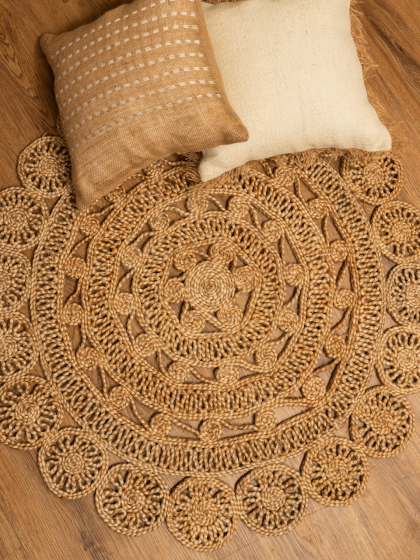
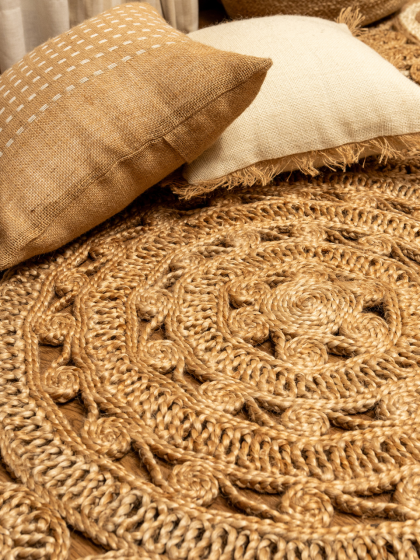
The rugs and carpets — including the Serene Rectangle and the Terra Round — are designed to be the quiet anchors of a room. Warm in color, grounding in texture, and built to look better with age. Natural jute develops a gentle patina over time that no synthetic rug can replicate.
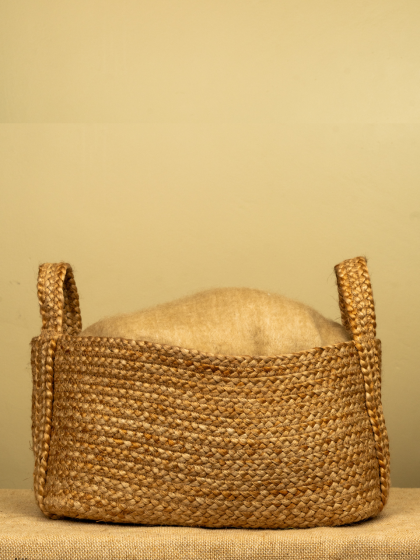
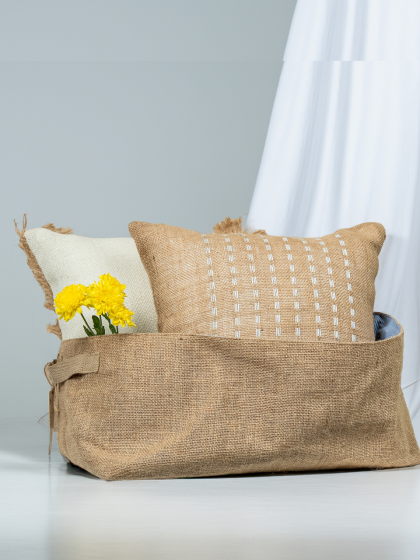
The baskets — the Nest and the Pod — are designed to do real work in your home. Hold things, organize things, contain the everyday chaos of living — but do it in a way that adds to a room rather than cluttering it.
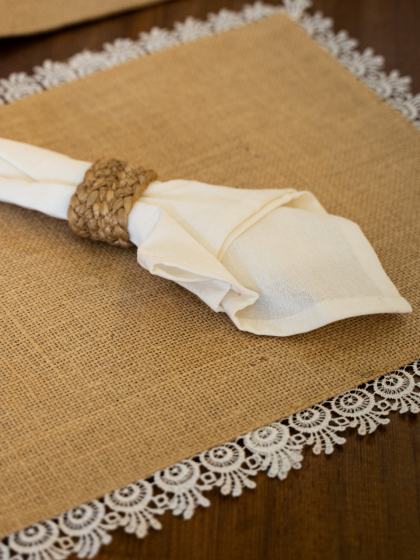
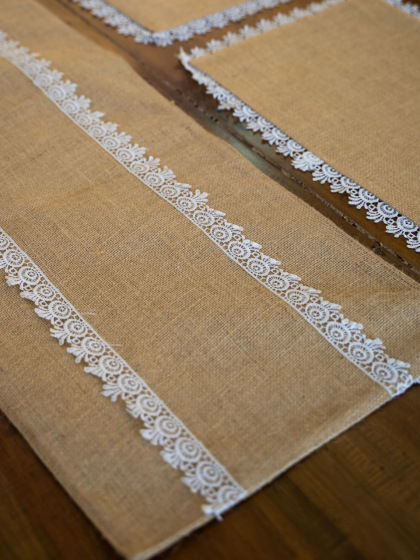
The table mats and runners — the Amara, the Grace, the Luna — are the details that make a difference. The kind of thing a guest notices and asks about. The kind of thing that makes an ordinary Tuesday dinner feel more considered.
The tote bags and pouches — the Hold, the Flow, the Core, the Patch — are built for daily life. Strong enough for a packed grocery run. Structured enough to carry to a meeting. Natural enough to feel genuinely good in your hands.
Each of these products exists because our factory made it well — and because our store brings it to you with the full context of where it came from.
Why “Made in Nepal” Is a Feature, Not Just a Label
There is a growing awareness among thoughtful shoppers that where something is made — and how — matters as much as what it is.
When you buy a TheKosha product, you are participating in something real:
- You are supporting Nepal’s manufacturing economy — keeping skilled jobs and industrial knowledge alive in a region where they matter deeply.
- You are shortening the supply chain — jute grown locally in the Terai, processed and manufactured in our own factory, and brought directly to you. No unnecessary detours, no hidden intermediaries.
- You are choosing a biodegradable product — one that will not sit in a landfill for 500 years after you are done with it.
- You are investing in quality — because a product made from natural materials, with real care, is built to outlast the disposable alternatives by years.
We say “Made for the World” not because we want to mass-export a commodity. We say it because we believe the values behind this product — sustainability, honest manufacturing, and quality over quantity — are values the world is increasingly hungry for.
Sustainability Isn’t a Trend for Us. It’s a Starting Point.
TheKosha did not add sustainability as a feature after the brand was built. It was the reason the brand was built.
Choosing jute as our core material was a deliberate rejection of synthetic alternatives. Manufacturing close to the source of the raw material was a deliberate choice to minimize transport emissions and support local industry. Designing products that are built to last — rather than to be replaced every season — is a deliberate refusal of the throwaway economy.
We are not a perfect brand. No brand is. But we are honest.
Every decision we make — from the fiber we choose to the factory we work with to the way we package our products — is made with one clear question in mind: is this the most responsible way to do this?
From Our Factory to Your Home
The jute plant takes about 120 days to grow from seed to harvest. In that time it can reach four metres tall, quietly pulling carbon from the air the whole way up. Then it is harvested, processed, spun, woven, shaped, finished, and packaged — entirely within Nepal — before making its way to our store and then to your door.
There is something deeply satisfying about a supply chain you can trace that clearly.
We hope the products feel that way too — honest, natural, and made with a level of care that you can actually feel the moment you hold them.
We’re glad you found us.
Explore the Collection
Every product mentioned in this story is available now at TheKosha.
👉 Shop Home Goods | Shop Bags & Totes | Read Our Full Story
Have a question about how our products are made? Contact us, we genuinely love talking about this.